Lakeshore Ontario: Waterfront Escape for GTA Families
Lakeshore Ontario: Waterfront Escape for GTA Families
Lakeshore, Ontario offers GTA families a waterfront lifestyle on Lake St. Clair at a fraction of Toronto-area prices, with newer subdivisions, high homeownership, and easy access to Windsor and Detroit. It's one of Essex County's fastest-growing communities and a proven draw for relocating families seeking space and lake access.
Is Lakeshore, Ontario a good fit for GTA families looking for waterfront living?
Lakeshore, Ontario is one of Windsor–Essex County's fastest-growing communities, offering GTA families a genuine waterfront lifestyle on Lake St. Clair, newer housing stock, and a high-ownership, low-density environment that's difficult to find anywhere near Toronto. Local real estate practitioners report strong and growing interest from buyers relocating from the GTA and London regions, drawn by the combination of lake access, modern subdivisions, and proximity to Windsor and Detroit.
I've lived in Lakeshore for over 23 years. I've watched this community grow from a quiet lakeside town into one of the most in-demand addresses in Essex County. And over the past few years, I've helped more and more families arrive from the GTA who've done the math and realized what's possible here. This post is for you if you're in that position right now.
What Makes Lakeshore Different From Every Other Ontario Town
Most Ontario communities will tell you they're growing. Lakeshore can back it up with numbers.
According to Statistics Canada's 2021 Census, Lakeshore's population grew from 36,611 to 40,410 residents between 2016 and 2021. That's a 10.4% increase in five years, outpacing both the Ontario provincial average of 5.8% and the national average of 5.2% over the same period. As of August 2026, the 2021 Census remains the most recent official full-count data for the town.
The Municipality of Lakeshore reports that over 1,000 new homes were added during that same five-year window, and the town explicitly positions itself as a top destination for new residents. That's not marketing language. That's infrastructure being built and families choosing to put down roots here.
As Windsor News Today reported in February 2022, Lakeshore led all of Essex County in population growth rate, and local radio outlet AM800 CKLW called it a "hotspot for residency." That momentum hasn't slowed.
The waterfront advantage: Lake St. Clair and Belle River
Lakeshore stretches along the southern shoreline of Lake St. Clair, and at the heart of that waterfront is Belle River. If you're picturing a sleepy fishing village, adjust that image. Belle River has marinas, waterfront parks, and a genuine lakeside community feel that GTA families consistently tell me they weren't expecting.
The town covers roughly 529 km² with a population density of about 76 people per km² as of 2021. Compare that to a typical GTA suburb running 1,000 to 3,000 people per km² and you understand immediately what families are buying here: space. Bigger lots. Quieter streets. A backyard that doesn't feel like a postage stamp.
The town blends waterfront residential pockets with newer inland subdivisions and some agricultural land further out. Depending on your priorities, you can be directly on the lake, a short walk from it, or in a modern subdivision a few minutes inland. That range of options is something I walk every relocating buyer through before we even start touring.
Who's already here
The demographic picture of Lakeshore is one of the things that makes it genuinely appealing for families making a long-term move. According to Point2Homes demographic data, approximately 91.6% of Lakeshore households are owner-occupied, with only about 8.4% rented. The average age sits around 40.8 years.
That ownership rate tells you something important: this is a community of people who bought in and stayed. You're not moving into a neighbourhood with high tenant turnover or heavy investor activity. That kind of stability matters, especially if you're uprooting your family from the GTA and want to land somewhere that feels settled.
The Market Picture and What GTA Buyers Are Finding
I want to be honest about the data here, because precision matters when you're making a decision this big.
The most recent specific market figures available as of August 2026 come from September 2025 commentary by a local real estate group. At that point, the average sale price in Lakeshore was reported at approximately $969,698, up roughly 29–30% year-over-year from 2024. Homes were averaging about 36 days on market, with approximately 6.9 months of inventory, which characterizes a balanced market rather than an overheated one. These are agent-level market observations, not official MLS statistics, and they reflect conditions in late 2025, not the present moment.
For context on what's driving that demand, local practitioners have noted increased buyer activity from people relocating from the GTA and London regions, particularly for newer homes and waterfront properties. That's market color, not a formal migration statistic, but it aligns with what I see in my own practice.
| Metric | Lakeshore (Sept 2025 data) |
|---|---|
| Average sale price (reported) | ~$969,698 CAD |
| Average days on market | ~36 days |
| Months of inventory | ~6.9 months (balanced market) |
| Population growth 2016–2021 | 10.4% (led Essex County) |
| Owner-occupied households | ~91.6% |
Market figures are from September 2025 agent commentary and are the most recent specific data available as of August 2026. Official population data is from the 2021 Census of Population (Statistics Canada). Verify current conditions directly with a local agent.
What I tell every buyer who asks me about timing: the list price is just the start of the conversation. A balanced inventory environment like the one Lakeshore showed in late 2025 means there's room to negotiate, ask for conditions, and take the time to find the right property. That's very different from the multiple-offer frenzy many GTA buyers are used to. Your conditions, financing, inspection, insurance, aren't red flags here. They're the tools that protect your family, and in a balanced market, you have more room to use them.
For a deeper look at how the Lakeshore market works and what to expect as a buyer, my complete 2026 guide to buying, selling, and relocating to Lakeshore covers the full picture.
Commuting and cross-border access
One of the first questions I get from GTA families is whether Lakeshore is realistic if one or both partners still works in Windsor or crosses into Detroit. The short answer is yes. Lakeshore sits east of Windsor within Windsor–Essex County, and the regional road network connects residents to Windsor's employment and services, as well as to the Windsor–Detroit crossings for cross-border work. The municipality explicitly highlights this access as a draw for professionals who want waterfront and suburban living without sacrificing commute practicality.
I won't quote you a specific commute time, that depends on where in Lakeshore you live and where in Windsor or Detroit you're headed. What I will tell you is that this is a question worth mapping out for your specific situation before you buy, and it's one I walk through with every relocating client.
What to Expect When You Start Your Search
Lakeshore isn't a one-size-fits-all market. The experience of buying a waterfront property on Belle River is completely different from buying in a newer inland subdivision. Here's what I see most GTA families gravitating toward:
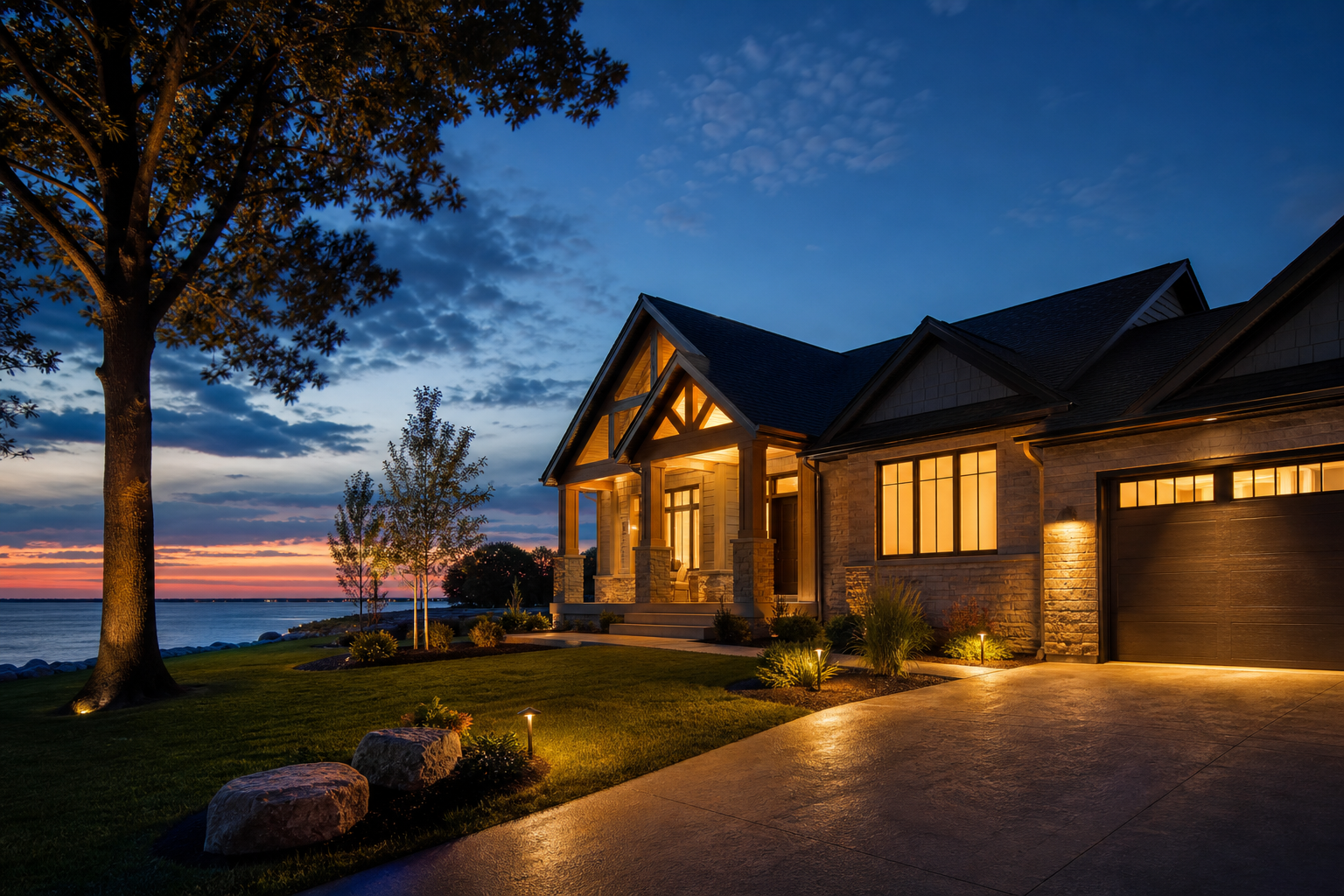
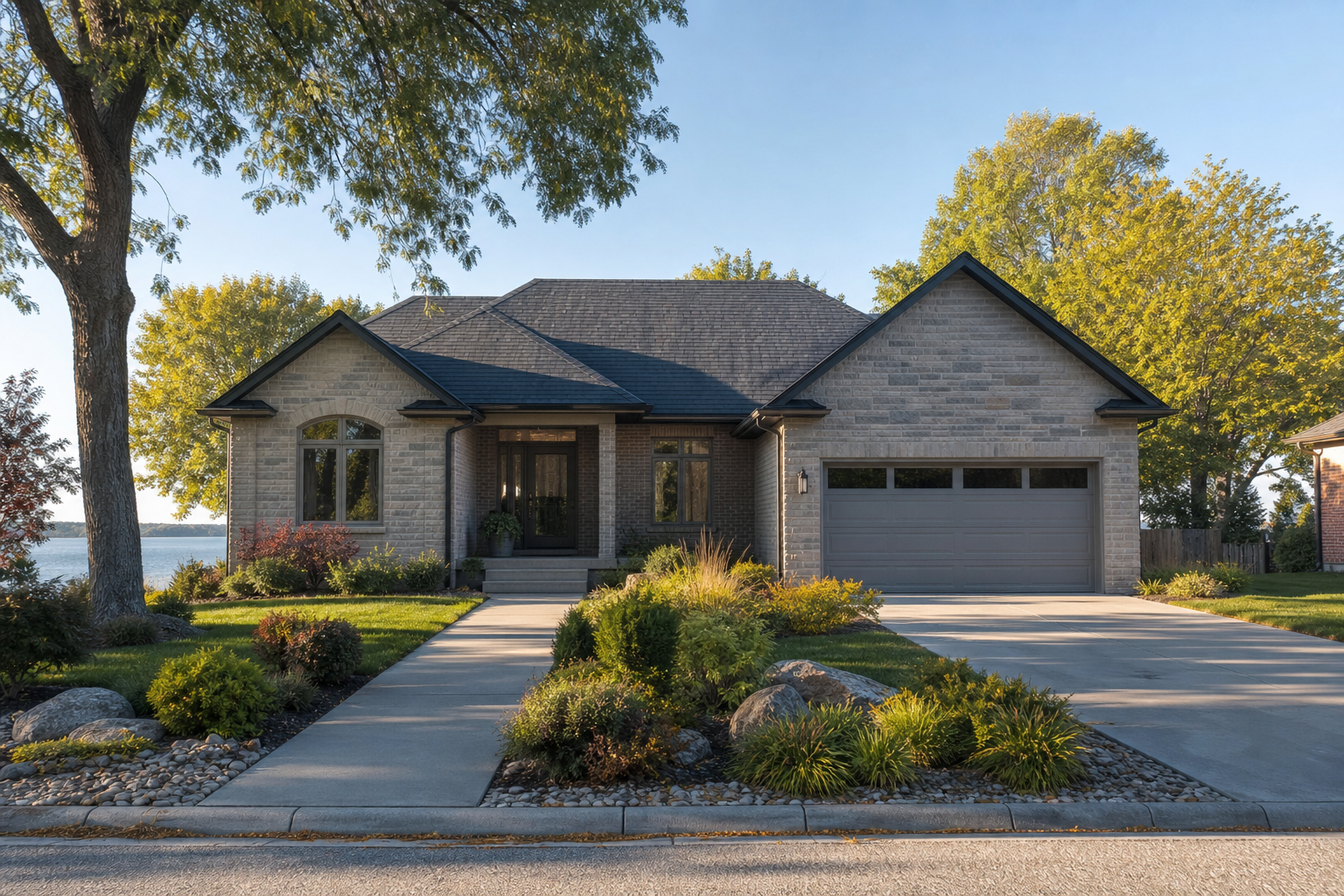
- Waterfront and near-waterfront homes in Belle River: Year-round residences with lake views, dock access, or walkable proximity to the water. These move faster and carry a premium, but they're still a fraction of comparable waterfront pricing anywhere in the GTA or Muskoka.
- Newer subdivisions inland: Modern builds with larger floor plans, attached garages, and newer infrastructure. These appeal to families who want new construction without the waterfront price tag. Lakeshore added over 1,000 new homes between 2016 and 2021 alone, so the supply of newer stock is real.
- Semi-rural properties with acreage: For families who want maximum space and a more rural feel, Lakeshore's 529 km² footprint includes properties that simply don't exist in the GTA at any price.
Every situation is different, and the only way to know which pocket of Lakeshore fits your family is to look at your specific needs: lot size, commute tolerance, proximity to the lake, budget, and whether you want a move-in-ready home or something with renovation upside. That's the conversation I have with every buyer before we start touring.
If you're also thinking about what happens on the other side of this move, selling a GTA property or a current home in Windsor–Essex, it's worth understanding how pricing strategy works in this market. I cover that in detail in my post on the pricing gap Lakeshore sellers miss.
Frequently Asked Questions
Is Lakeshore, Ontario a good option for GTA families who want waterfront living without Toronto prices?
Yes, and it's one of the most consistent reasons GTA buyers end up here. Lakeshore sits on Lake St. Clair with genuine waterfront access through communities like Belle River, and its price point is dramatically lower than comparable waterfront properties in the GTA or cottage country. Local real estate practitioners report that buyers from the GTA and London regions have been a meaningful part of Lakeshore's demand, particularly for newer homes and lakefront properties. Your specific budget will determine exactly what's available, and that's a conversation worth having with a local agent who knows this inventory.
How far is Lakeshore from Windsor and Detroit, and is commuting realistic?
Lakeshore lies east of Windsor within Windsor–Essex County and connects to Windsor's employment and services via the regional road network. The municipality also highlights access to Detroit via the Windsor–Detroit crossings as a draw for cross-border workers. Commute times vary depending on exactly where in Lakeshore you live and where you're headed, so I'd recommend mapping your specific route before committing to a neighbourhood. It's one of the first things I walk through with relocating families.
Are there newer subdivisions and lakefront communities in Lakeshore for young families?
Yes, both. The Municipality of Lakeshore reports that over 1,000 new homes were added between 2016 and 2021, and the town actively positions itself as a top destination for new residential development. Belle River is the main lakefront hub with marinas, parks, and waterfront homes, while newer inland subdivisions offer modern builds with larger lots. The range of options is one of Lakeshore's strengths for families at different price points and lifestyle priorities.
How competitive is the Lakeshore real estate market, and how long do homes sit?
The most recent specific figures available as of August 2026 are from September 2025 agent commentary, which reported an average of about 36 days on market and approximately 6.9 months of inventory, consistent with a balanced market. That's meaningfully different from the tight, multiple-offer conditions many GTA buyers are accustomed to. A balanced market gives you more room to include conditions on financing and inspection, which I always recommend. For current conditions, reach out directly, the market can shift and you want real-time data before you make an offer.
What's the community feel in Lakeshore, small-town, suburban, or rural?
It's genuinely a blend of all three, and that's part of the appeal. The Belle River area has a small-town waterfront feel with local amenities and a strong community character. Newer subdivisions closer to Windsor feel more suburban. Further out, the town opens into agricultural and semi-rural land with more acreage. With a population density of roughly 76 people per km² as of the 2021 Census, Lakeshore is genuinely low-density compared to any GTA community. And with about 91.6% of households owner-occupied, it has the stability that comes with a community of long-term residents.
Lakeshore is one of those places that makes more sense the closer you look at it. Fast population growth, a genuine waterfront on Lake St. Clair, newer housing stock, and a community built around long-term ownership, it's a combination that's hard to find anywhere in Ontario at this price point.
If you're a GTA family seriously considering a move to Lakeshore, I'd rather spend 30 minutes walking through your specific situation than have you rely on general information. I've lived here for over 23 years and helped families make exactly this transition. Book a consultation and let's figure out whether Lakeshore is the right fit for your family.
This article is provided for general informational purposes only and does not constitute legal, tax, or financial advice. Readers should verify all market data, program details, and transaction costs with their own real estate lawyer, tax advisor, and mortgage lender. Kris Ramotar is a registered REALTOR® regulated by the Real Estate Council of Ontario (RECO). Equal Housing Opportunity.
Recent Posts