When Belle River Families Should Actually Upsize
The right time to upsize in Belle River comes down to two things: your household has genuinely outgrown its current space, and your finances can absorb the larger mortgage, taxes, and carrying costs. Market conditions matter, but they're secondary to those two tests.
When is the right time to upsize in Belle River?
The right time to upsize in Belle River is when your household has consistently outgrown its current space AND your finances can carry the larger mortgage, property taxes, utilities, and maintenance without strain. Market timing plays a supporting role, but the household test comes first. If both conditions are met, the window is open regardless of the season.
Key Takeaways
- Windsor–Essex recorded 428 residential sales in August 2026, down 8.55% year over year, which means buyers have more negotiating room than they did a year ago.
- 1,127 new listings hit the Windsor–Essex market in August 2026 alone, giving upsizers more choice at the larger end of the market.
- Belle River sits within the Municipality of Lakeshore, not Windsor city, so countywide averages can mask meaningful differences in price, lot size, and property type.
- The mortgage stress test still applies to every new purchase, meaning your qualifying rate will be higher than your contract rate, confirm your actual numbers with a lender before you commit.
- Buying before selling carries real financial risk in a slower market; a local market analysis of your current home's value is the first step before making any move.
Every few months I talk to a homeowner in Belle River who already knows the answer to this question. The kids are sharing a room. The home office is the dining table. The backyard that felt fine five years ago now feels like a postage stamp. They're not asking me whether to upsize, they've already decided. What they're really asking is: is now the wrong time to do it?
That's the right question. And the honest answer is that the decision to upsize in Belle River lives at the intersection of two separate conversations: what's happening inside your household, and what's happening in the local market. Let me walk you through both.
How do you know your household has genuinely outgrown its current home?
Space problems that are temporary don't justify a move. Space problems that are structural do. Here's how I help clients tell the difference.
Are the constraints persistent, not occasional?
One crowded weekend doesn't mean you need to move. But if the bedroom count, layout, or lot size is creating friction every single week, no dedicated workspace, kids with no separation, no room for aging parents or a growing household, that's a structural problem. A renovation might solve part of it, but Belle River's established neighbourhoods have real lot and footprint limits. Sometimes moving is the only practical answer.
Will your needs grow in the next five years?
Upsizing is a long-horizon decision. If children are young, if remote work is permanent, or if you're planning to care for a parent, the space gap you're living with today will likely widen. I always ask clients to project forward, not just describe today. The home you buy now needs to fit the household you'll have in 2030, not just the one you have in 2026.
Can you modify your current home instead?
Before assuming a move is necessary, check whether an addition, a finished basement, or a garage conversion could solve the problem. In some parts of Lakeshore, zoning and lot coverage rules limit what's possible. In others, a well-planned addition costs far less than the transaction costs of moving. Worth confirming before you list.
What does the Belle River and Lakeshore market look like for upsizers right now?
Belle River is an unincorporated community within the Municipality of Lakeshore in Essex County. That distinction matters for market analysis. Countywide Windsor–Essex figures are useful context, but they include Windsor city, Tecumseh, LaSalle, Kingsville, and rural Essex, all of which can look very different from Lakeshore's near-water communities at the larger end of the market.
With that framing in place, here's what the most recent data shows. According to Windsor News Today's September 2026 report, Windsor–Essex recorded 428 residential sales in August 2026, down 8.55% compared to August 2025. In the same month, 1,127 properties were newly listed across the county. That combination, fewer sales, more listings, means inventory is building and buyers have more leverage than they did a year ago.
For someone looking to upsize in Belle River, a softer market cuts both ways. You may have more selection and more negotiating room on the larger home you're buying. But if you need to sell your current home first, you're also selling into that same softer market. The net effect depends heavily on the gap between what you own and what you're buying, and that's exactly the kind of analysis I run for clients before we make any decisions.
For the most current figures specific to Lakeshore and Belle River, the Windsor–Essex County Association of REALTORS® publishes monthly data that I'd recommend reviewing alongside any countywide summary.
| Market Indicator | August 2026 (Windsor–Essex) | What It Means for Upsizers |
|---|---|---|
| Residential sales | 428 (down 8.55% year over year) | Less competition from other buyers on larger homes |
| New listings | 1,127 | More selection at the upper end of the market |
| Sales-to-listing ratio | Declining (buyer's market conditions) | More room to negotiate price and conditions |
Source: Windsor News Today, September 3, 2026. Countywide figures, Belle River-specific data should be confirmed with a local market analysis.
Should you buy before selling, or sell first?
In a market where listings are rising and sales are slowing, selling first is generally the lower-risk path. Carrying two mortgages, even briefly, is a real financial exposure. Your lawyer will hold the deposit funds from your sale in trust, but the timing gap between closing dates can create cash-flow pressure if the two transactions don't align. I walk every upsizing client through the sequencing before we do anything else, because getting it wrong is expensive.
That said, there are situations where buying first makes sense, particularly if your current home is in strong demand and you've found a property that's unlikely to sit. Every situation is different, and the only way to know which approach fits yours is to run the numbers with someone who knows this specific market. If you want a broader look at how the upsizing decision plays out across Windsor–Essex, I've written about it in detail in Upsize Your Home in Windsor–Essex: Where to Look.
What about larger homes near the water in Belle River?
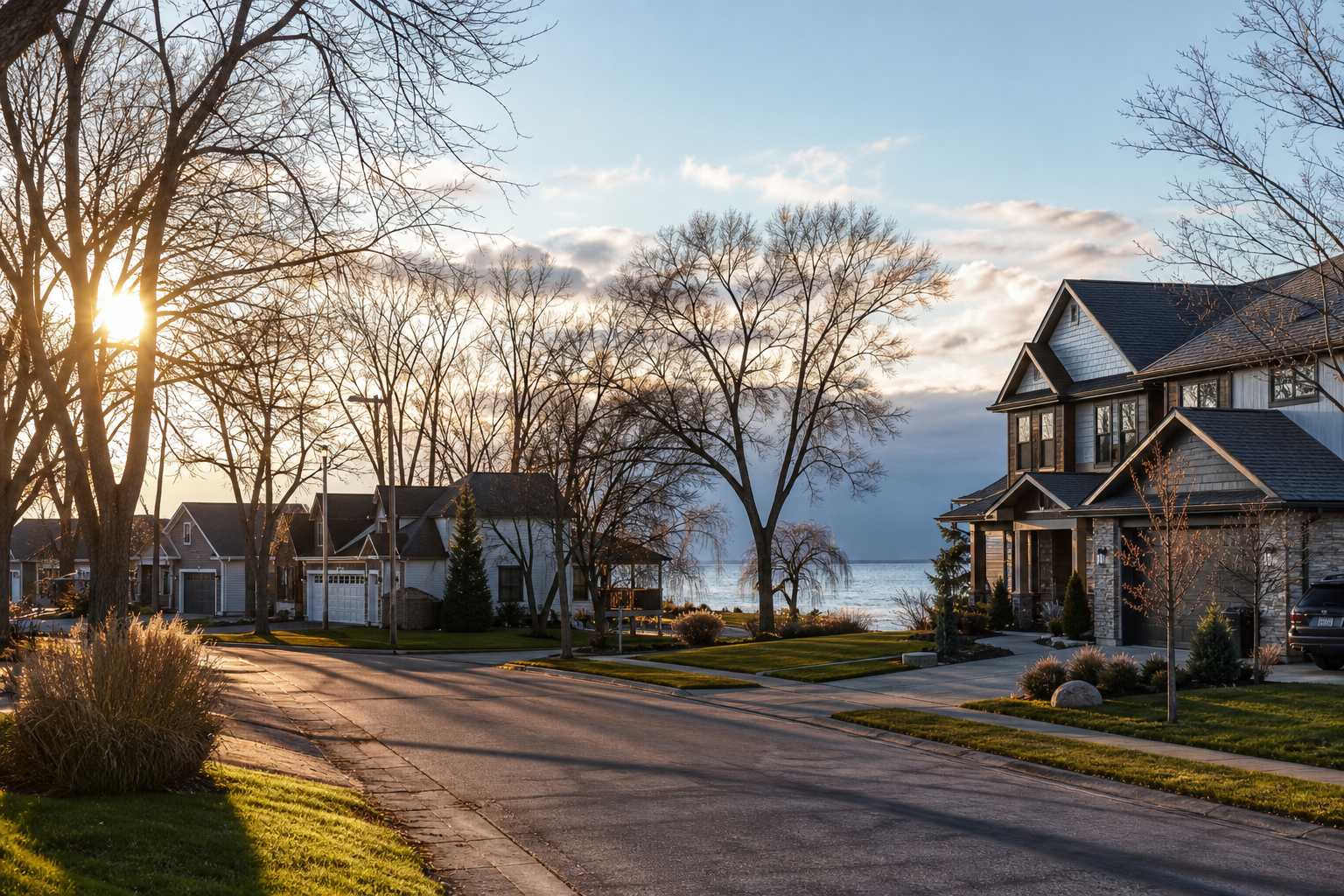
Belle River's proximity to Lake St. Clair creates a meaningful price and demand split between waterfront or near-water properties and inland homes. A countywide average tells you almost nothing about what a four-bedroom detached home on a larger lot near the water will cost. Compare like-for-like: detached versus detached, newer subdivision versus established neighbourhood, waterfront versus inland. I'd also point you to the Belle River, Ontario: Newcomer's Guide 2026 for a fuller picture of what different parts of the community look like on the ground.
What monthly costs should you compare before upsizing in Belle River?
The mortgage payment is the number most people focus on. It's not the only number that matters. Here's what I tell every client who's running the financial side of an upsizing decision.
The full carrying-cost picture
A larger home in Lakeshore typically means higher property taxes, higher utility costs (heating a bigger space matters in an Essex County winter), higher home insurance, and higher maintenance. None of those are fixed, they depend on the specific property, its age, its systems, and its lot. Before you assume you can afford the move, build out the full monthly cost picture, not just the mortgage payment.
On the mortgage side, Canada's mortgage stress test, administered under guidelines from the Office of the Superintendent of Financial Institutions (OSFI), requires you to qualify at a rate higher than your actual contract rate. That gap can meaningfully reduce the purchase price you qualify for. Verify your actual qualifying amount with a licensed mortgage professional before you set a budget, not after.
If you're putting less than 20% down on the new property, CMHC mortgage default insurance will apply, which adds a premium to your mortgage balance. For most upsizers moving from an existing home with equity, a conventional mortgage (20% or more down) is the more common path, but confirm with your lender.
Don't overlook the transaction costs
Selling your current home and buying a larger one both carry costs. Ontario's Land Transfer Tax applies to the purchase, and first-time buyer rebates won't apply here. Legal fees, title insurance, home inspection, and any adjustments at closing all add up. Your real estate lawyer will walk you through the specifics on closing day, but factor these into your planning well before you make an offer.
For a broader look at whether 2026 is the right year to make this move, Is 2026 the Right Year to Move Up in Windsor–Essex covers the macro picture in more detail.
Can you keep your current home as a rental?
Some upsizers ask whether they can hold onto their current Belle River home as an investment property instead of selling. It's worth exploring, but it changes the financial picture significantly. Your lender will factor the existing mortgage into your debt-service ratios, and qualifying for a second mortgage while carrying the first is a higher bar. There are also tax implications, rental income is taxable, and if the property is no longer your principal residence, the principal residence exemption from capital gains tax no longer applies to future appreciation on that property. Talk to a tax advisor before you decide.
If you want a detailed look at how upsizing works specifically within Lakeshore's communities, I've covered it in Upsizing in Lakeshore Ontario: What to Know.
The short version: your specific number depends on your home's condition, the property you're targeting, your current mortgage balance, and your household income. That's where a personalized market analysis comes in, and it's a conversation I'm happy to have before you commit to anything.
If you're weighing the decision to upsize in Belle River, the right move is to start with an honest look at both your household needs and your actual carrying capacity, not just the market headlines. When those two things align, the timing tends to take care of itself.
I've helped over 160 families across Windsor–Essex County work through exactly this decision. If you're ready to talk through yours, book a no-pressure consultation and we'll look at the real numbers together.
Before you go, I'd be glad if you took a moment to read what past clients have said, you can find my reviews on Google and Zillow.
Frequently Asked Questions
Is Belle River a good place to move into a bigger home in 2026?
Belle River offers detached homes on larger lots within the Municipality of Lakeshore, with waterfront access and a quieter community feel than Windsor city. Whether it's the right fit depends on your household's specific needs, commute, and budget, the community has real strengths, but a larger home here also means confirming that daily travel, services, and carrying costs work for your situation.
Should I buy the larger Belle River home before selling my current house?
In a market where listings are rising and sales have slowed, Windsor–Essex saw 428 sales in August 2026, down 8.55% year over year, selling first is typically the lower-risk path. Carrying two mortgages creates real financial exposure, and your ability to close on the new property without selling the old one depends on your qualifying income and existing debt load. I walk every upsizing client through the sequencing before anything else.
How much more income do I need to qualify for a bigger mortgage in Belle River?
Canada's mortgage stress test requires you to qualify at a rate above your actual contract rate, which reduces the purchase price you're approved for. The exact income requirement depends on your current debts, down payment, and the specific property's taxes and condo fees. Verify your qualifying amount directly with a licensed mortgage professional, the number on a calculator is not the number your lender will use.
Are larger homes in Belle River taking longer to sell than starter homes?
Larger, higher-priced homes typically see longer days on market than entry-level properties in any market, and that gap tends to widen when overall sales slow. With Windsor–Essex sales down year over year as of August 2026, pricing a larger home accurately from day one matters more than ever. An overpriced listing at the upper end of the market will sit, and sitting homes lose negotiating leverage.
What monthly costs should I compare before upsizing in Belle River?
Compare the full carrying cost, not just the mortgage payment: property taxes on the new home, home insurance, heating and utilities for a larger footprint, and ongoing maintenance. A larger home in Lakeshore will typically run higher on all of these than your current property. Build the complete monthly picture before you set your purchase budget, and confirm your mortgage qualification with a lender using the actual property's tax figures.
This article is general information only and does not constitute legal, tax, or financial advice. Readers should confirm their own numbers with their real estate lawyer, tax advisor, or mortgage lender. Kris Ramotar is a registered real estate salesperson regulated by the Real Estate Council of Ontario (RECO). Equal Housing Opportunity.
Recent Posts